Every organization is a human system. We read yours through three dimensions.
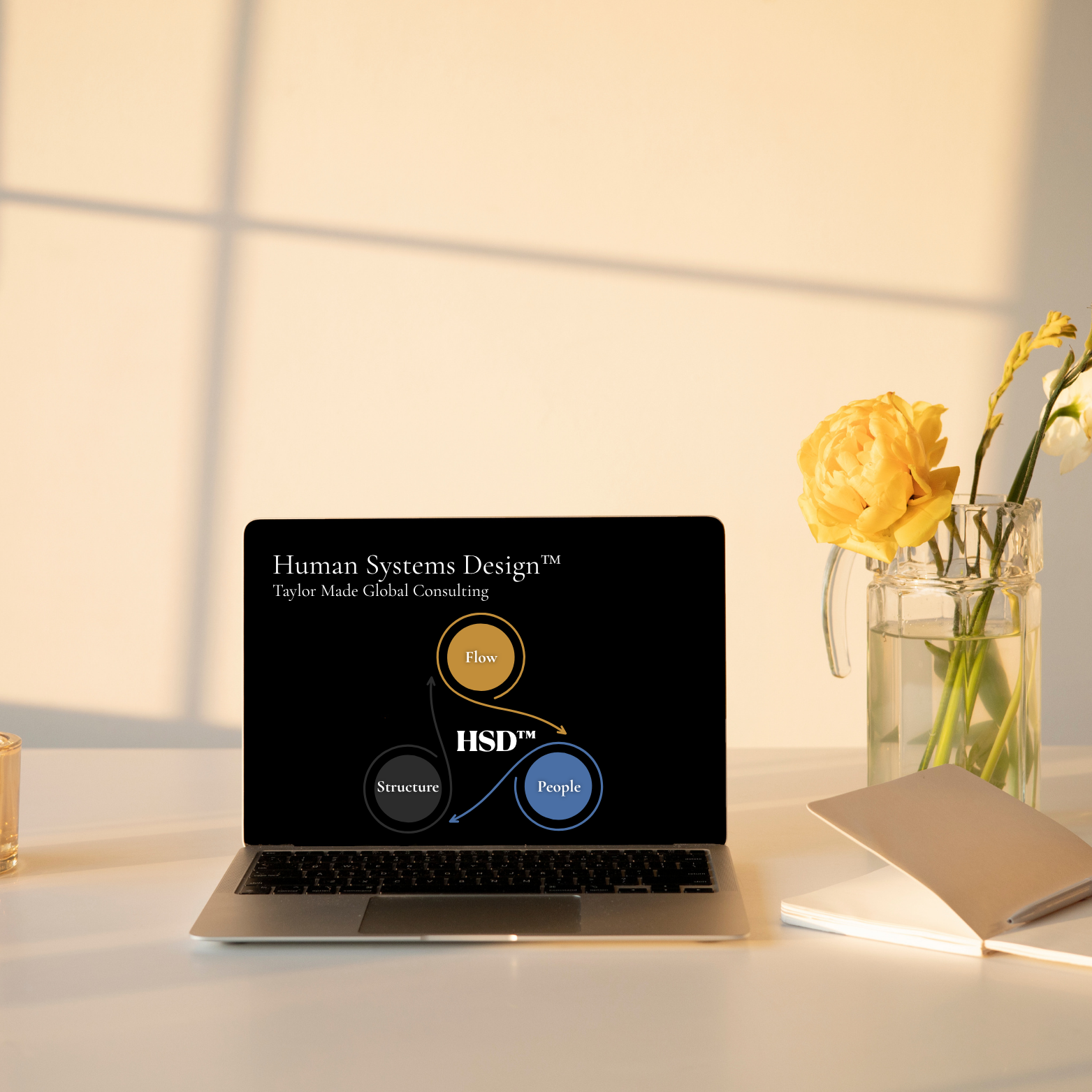
Human Systems Design™ is the foundation of how we work. It’s a way of seeing what’s actually producing your results, the dynamics beneath the surface that shape culture, performance, and outcomes. We read every organization through three interdependent dimensions: People, Structure, and Flow.
By “systems” we don’t mean software or IT. We mean the living system of your organization — the people in it, the way it’s structured, and how work and decisions actually move.
People are the core of every system. In Human Systems Design, we focus on how individuals experience, contribute to, and grow within the organization: capability, confidence, motivation, and alignment to purpose. When people are well-positioned and equipped, performance and culture move forward together.
Structure is more than hierarchy. It includes roles, decision-making authority, processes, and how work gets done across the organization. Clear, well-aligned structures make it easier for people to execute with clarity and reduce friction across teams. In strong systems, structure enables momentum, it doesn’t hinder it.
Flow is how information, energy, and resources move through the system. It reflects how fast decisions are made, how clearly communication travels, and whether priorities stay connected across levels. When flow is disrupted, even the best strategy stalls. Healthy systems keep flow intentional, visible, and supported.
People, Structure, and Flow are interdependent. People come first, because nothing moves without them, but no single dimension works alone. Strengthen one and you shift the others; ignore one and it limits the rest.
We bring clarity to what others treat as a mystery.
These three dimensions are the lens through which we diagnose issues, design solutions, and guide change. We don’t treat culture as something intangible or unknowable. Through Human Systems Design, we make the behaviors, structures, and interactions that define your organization visible, so we can work them with intention.
Our CPO Model (Culture, Performance, Outcomes) is built on what HSD reveals. When we examine culture, we’re really examining how people function, how structure supports or hinders progress, and how work flows through the system. That’s what makes the solutions not only strategic, but sustainable.
Let’s design the future together.
Start the Conversation